
Prajwal Pisal

Prajwal Pisal

Test Engineer | Applied AI/ML Researcher

Results-driven and self-motivated Software Engineer with 2+ years of experience, Test Engineer, Accomplished Mentor, crafting robust software solutions with a diverse technical skill set to deliver business useful insights. Currently excelling as Test Engineer at Hyve Solutions, having a proven track record in the development and implementation of test processes, the development of automated software and server test scripts and the analysis of failure reports to improve system reliability and product quality. Successfully trained & mentored 15+ junior employees across multiple company branches.

Authored research papers accepted, presented, and published in peer-reviewed international research conferences and journals with prestigious organizations including Scientific Reports (by Springer Nature) and IEEE Access (by IEEE); and also have served as a Peer reviewer for international research conferences.

Selected Publications

Publication 1

An Integrated TOPSIS and ARAS Method Multi-Criteria Decision-Making Approach for Optimizing Investment Portfolios Using Goal Programming and Genetic Algorithm Model

Prajwal Pisal, Kiran Kumar Reddy, Jaydeep Kishore, Ram Reddy Jonnalagadda, Manish Kumar, Gayathri Band, B.P.Joshi

Scientific Reports | Springer Nature | IF = 3.9, 5th most cited journal in the world

Paper Published

DOI Link
As the portfolio optimization field grows, classical techniques often notoriously find it difficult to efficiently model how investors decisions, risk tolerances, and asset attributes intertwine. This paper presents an innovation-based hybrid method, where Technique for Order Preference by Similarity to Ideal Solution (TOPSIS) combined with Additive Ratio Assessment (ARAS) for multi-criteria decision making, Goal Programming (GP) and a Genetic Algorithm (GA) for finding constraints are united. The proposed approach enhances the accuracy of ranking and effectiveness of allocation by incorporating asset evaluation, characterization of investors and probabilistic construction of portfolios. The system is tested in view of various performance implications, using the FAR-Trans dataset, a collection of genuine transaction statistics and asset pricing, as well as investor data. The first step involves project transaction capacities partitioning and risk categorization to create a bipartite TOPSIS–ARAS scoring mechanism. The GP part of the model matches investment decisions to the individual return and risk expectations of each investor, and the GA promotes the use of entropy-aware strategies. Important performance metrics are a Sharpe Ratio of 2.241, the annualized return of 4.6% and diversification score of 0.845. The study also reflects a 0.729 correlation between TOPSIS–ARAS rankings, and GP configurations leading to portfolio returns of over 30.0%. The system offers a realistic depiction of the behavior of investors, considering several transaction channels and different risk factors as well as geographies. The comprehensive integration is very flexible, computationally effective and based on realistic investment models while minimizing constraint deviation.
Publication 2

Enhancing Brain Tumor Diagnosis with Ensemble Deep Learning and Optimizer Tuning on MRI Data

Prajwal Pisal, Anisha Jadhav

Scientific Reports | Springer Nature | IF = 3.9, 5th most cited journal in the world

Paper Revision Submitted, Under Review

Magnetic Resonance Imaging (MRI) plays a critical role in the accurate and early detection of brain tumors, enabling effective clinical decision-making and treatment planning. However, distinguishing between malignant and benign tumors remain chal- lenging due to substantial variations in shape, texture and intensity patterns. This study proposes a hybrid deep learning frame- work that integrates Convolutional Neural Networks (CNN), Recurrent Neural Networks (RNN), and Long Short-Term Memory (LSTM) networks to improve the accuracy of brain tumor classification from MRI scans. The model combines the spatial feature extraction of CNNs, the sequential pattern recognition of RNNs, and the long-range dependency modeling of LSTMs, creating a more robust and holistic classification system. The proposed approach was evaluated using the Kaggle Brain Tumor MRI dataset, comprising 3,000 labeled MRI images classified into tumor and non-tumor categories. The proposed model achieved an accuracy of 93%, precision of 91%, recall of 92%, F1-score of 91%, and an AUC of 0.95, outperforming single models such as CNN (91%). RMSprop was identified as the optimal optimizer, providing faster convergence and improved gradient sparsity. An ensemble meta-learning stacking strategy was employed to integrate CNN, RNN, and LSTM predictions, effectively reduc- ing misclassification and enhancing overall performance. These results highlight the potential of ensemble deep learning for improving diagnostic accuracy in clinical practice. Future work will focus on optimizing computational efficiency, incorporating additional imaging modalities, and enhancing interpretability to facilitate clinical adoption.
Publication 3

Pathological Speech Synthesis: A Framework and Performance Analysis

Prajwal Pisal, Anisha Jadhav

IEEE Access | IEEE | IF = 3.6

Paper Accepted, Revision Under Progress by Authors
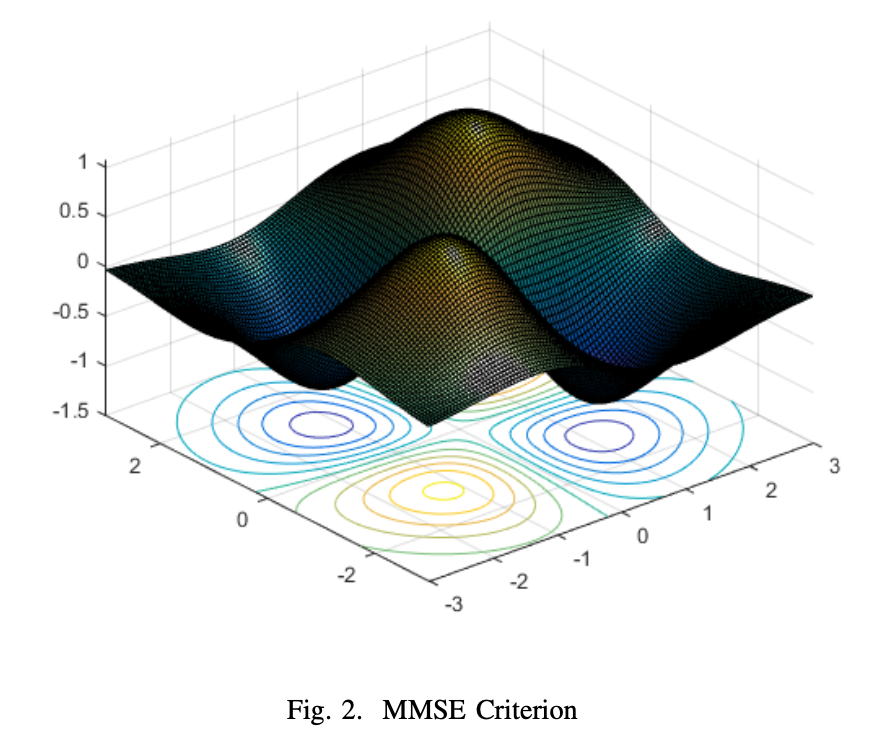
This paper presents a framework for synthesizing pathological speech by incorporating changes in the articulatory domain. Through a pilot study comparing GRU and LSTM architectures with an Adam optimizer, it was found that GRU outperformed LSTM in this context, though no general consensus exists on the superiority of one over the other for specific datasets. The framework was tested on MFCC (Mel- frequency cepstral co-efficient) predictions, where speaker-independent architectures demonstrated superior performance on the MOCHA-TIMIT datasets compared to speaker-dependent ones. An analysis of neural network activations revealed that these models learn line-like boundaries potentially representing phonetic structures. The study identified that the quality of synthesized speech is more limited by the vocoder than by the acoustic mapping, with 88% of the variance attributed to vocoder analysis-resynthesis. Furthermore, a statistically significant improvement in generalization performance was observed with the addition of more training data. The study also explored the synthesis of pathological speech, with informal feedback suggesting the synthesized examples resembled disordered speech. The framework offers a platform for implementing pathological articulations by mapping physiological changes in a low-dimensional articulatory space. Future work will focus on enhancing vocoder quality and developing models that consistently reflect specific speech pathologies. An open-source repository has been provided to reproduce these results.
Publication 4

Harnessing Kernel Tricks for NonLinear Problem Solving: SVM Applications

Anisha Jadhav, Prajwal Pisal

IRASET 2025 | 2025 5th International Conference on Innovative Research in Applied Science, Engineering and Technology | Fez', Morocco

Paper Accepted, Presented in May 2025; and Published in May 2025

DOI Link
Real-world problems often exhibit complex, nonlinear relationships between variables, which cannot be adequately addressed through linear assumptions. This paper explores how advanced algorithms, specifically the kernel trick, transform these nonlinear problems into higher-dimensional spaces, facilitating easier solutions. The mathematical underpinnings of the kernel trick, including the Volterra filter and Hilbert space transformations, are explored. The study implements Support Vector Machines (SVM) with Gaussian kernels to solve the XOR Toy problem, double Fibonacci spiral, and the Breast Cancer Wisconsin dataset, highlighting the efficacy of nonlinear transformations. Experimental results demonstrate high classification accuracy, validating the robust application of kernel methods in complex data analysis.